FROZEN
MOMENT
LIVE
ACTION
STOP-
START
SLOW
MOTION
TIME
RAMP
SPACE
RAMP
TIME
BLUR
SPACE
BLUR
LONG
EXPOSURE
MULTIPLE
EXPOSURE
OPEN
FLASH
FLASH
TRAIL
LIGHT
PAINTING
MOTION
DISTORTION
MATCH
CUT
UNIVERSAL
CAPTURE
|
TECHNIQUES - SPACE RAMP
A space ramp occurs when the speed (through space) of the virtual moving camera changes within a shot. For example when the speed changes from ten meters per second (a relatively high speed) to one meter per second (a much lower speed).
To achieve a space ramp within our systems we vary the distance between the cameras gradually (or abruptly) across the system - either physically in the rigging or by dropping frames or interpolating frames in post.
The concept behind the space ramp can be applied to any camera movement path, so for example, within a shot the virtual camera can very abruptly (instantaneously if desired) change direction and or speed without impacting the frame rate. With a normal cinema camera issues of physics and inertia tend to constrain camera movement when physically moving a camera, making abrupt changes in velocity all but impossible.

| |
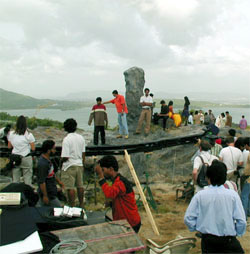
Timetrack™ 160 lens camera on location in India
|
EXAMPLE - SPACE RAMP
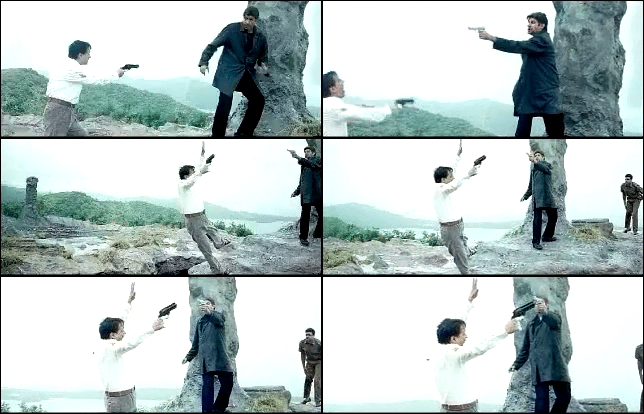
Project: ASK (2001) - feature film
Equipment: Timetrack™ 160 lens camera
Client: AB Corp / Flicks Motion Picture Company
Director: Rakesh Mehra
Production Company: Flicks (India)
Producer: Shyam P.S.
Post Production: Digital Air / Soho 601 (London)
| |
This example of a space ramp was recorded by mounting an Arri 435 (for the live action) on one end of a Timetrack™ 160 lens camera and operating the Timetrack™ camera in frozen moment mode (simultaneous shutters). In this shot the ramp is a sudden change and was created in post by dropping frames in the first half of the shot, which in effect creates more space between each Timetrack™ frame and speeds up the virtual camera movement in the first half of the shot.
|
|
|

