Flash photography freezes the action. Long exposures result in motion blur. The combination of the two is called open flash. Open flash can result in fascinating mixtures of photographic clarity and motion blur.
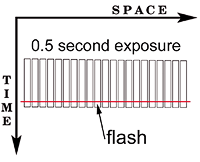
With Digital Air's camera systems we can use the open flash technique in ways that are impossible with a motion picture camera or a still camera. For example, we can off-set long exposures across the system (see chart below) so that there is movement in the motion blur effect.
We can also produce live action images of the subject that move forward in time normally by illuminating the subject with high speed sequential strobes.
Controlling when the photo-strobe(s) fire relative to the long exposure gives the director control over whether the blur is in front of or trails behind the flash exposure.
photo: William Klein
EXAMPLE - OPEN FLASH
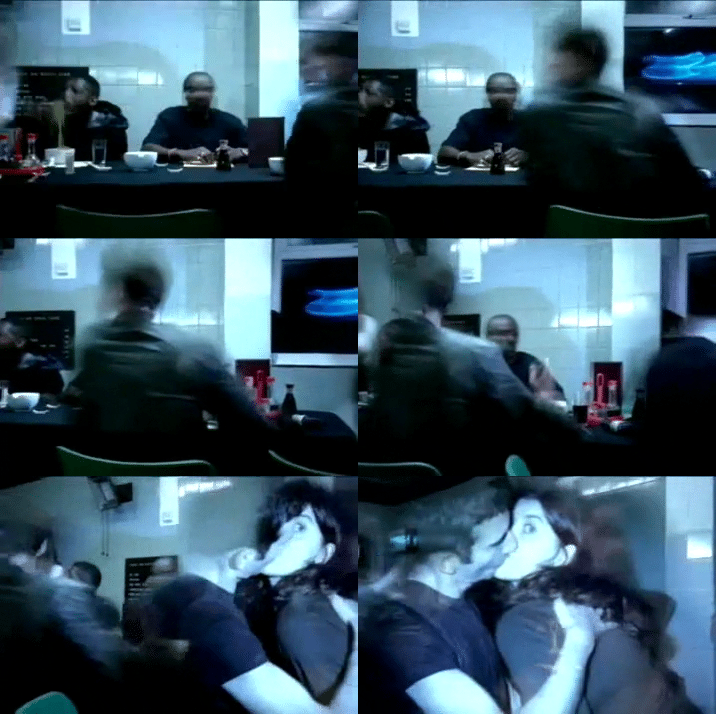
Project: Orange Photo Messaging - TV commercial
Equipment: Timetrack 160 lens straight / curved camera Client: Orange Director: Chris Cunningham Production Company: RSA (London) Producer: Cindy Burnay Post Production: Glassworks (London)
This example of open flash is a long exposure with a single flash at the end of the exposure. The flash was produced with a Nikon Speedlight (a small still camera flash) and was triggered by hand just before the Timetrack camera system's shutters closed.